Product Name | HIV-1 tat Protein Cys-TAT (47-57), Cys-TAT Cys N-term |
Product Quantity | 5mg |
Catalog Number | LT8115 |
Molecular Weight | 1662 |
Formula | C67H124N34O14S |
Sequence | Cys-Tyr-Gly-Arg-Lys-Lys-Arg-Arg-Gln-Arg-Arg-Arg-NH2, CYGRKKRRQRRR, amide |
Product Description | 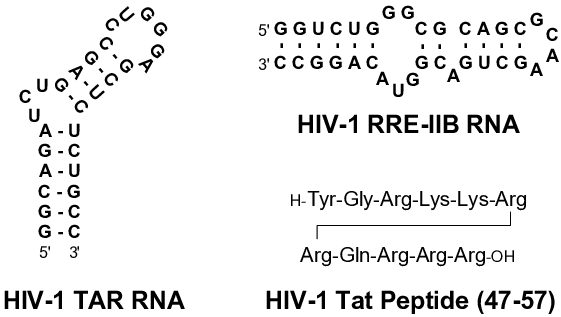
This is the most characterized fragment of the HIV transactivator protein (TAT) YGRKKRRQRRR. This arginine-rich TAT peptide penetrates the plasma membrane directly, but not through endocytosis. Oligomers of the TAT(47-57) peptide compact plasmid DNA to nanometric particles and stabilize DNA towards nuclease degradation. At optimized vector compositions. These peptides mediated gene delivery to cells in culture 6-8-fold more efficiently than poly-L-arginine or the mutant TAT2-M1. The HIV-tat peptide YGRKKRRQRRR is a powerful tool in biotechnology and medicine, primarily due to its ability to penetrate cells. Its applications range from genetic engineering in microalgae to enhancing drug delivery and protecting against UV-induced skin damage. The ongoing research into its uptake mechanisms and potential uses in various fields highlights its versatility and importance in scientific advancements. |
Scientific Background | HIV-1 tat Protein Cys-TAT (47-57), Cys-TAT Cys N-term is a synthetic HIV-derived research peptide. Synthetic peptides derived from HIV proteins have long been used to map B-cell and T-cell determinants, define HLA-restricted cytotoxic T-lymphocyte epitopes, study viral protein interactions, and provide sequence-defined controls for immunological assays. Because HIV proteins are highly variable and peptide function depends strongly on the source protein, residue range, viral subtype, and HLA allele, biological interpretation should be made for the exact product sequence rather than for HIV-derived peptides as a single class. |
Research Applications | - HIV-specific T-cell assays
- HLA-restricted epitope mapping
- antibody-binding studies
- viral protein interaction experiments
- sequence-variant and subtype comparisons
|
Experimental Notes | For antigenic or viral peptides, HLA restriction, cellular response, and immunological activity should not be inferred solely from the source protein name; the exact sequence, residue numbering, strain or genotype, and experimental system should be considered. For labeled or otherwise modified variants, the modification may also affect binding or assay behavior. |
Selected References | - T cell recognition of HIV synthetic peptides in natural infection
- Helper and cytotoxic T cell responses of HIV-1-infected individuals to synthetic peptides
|