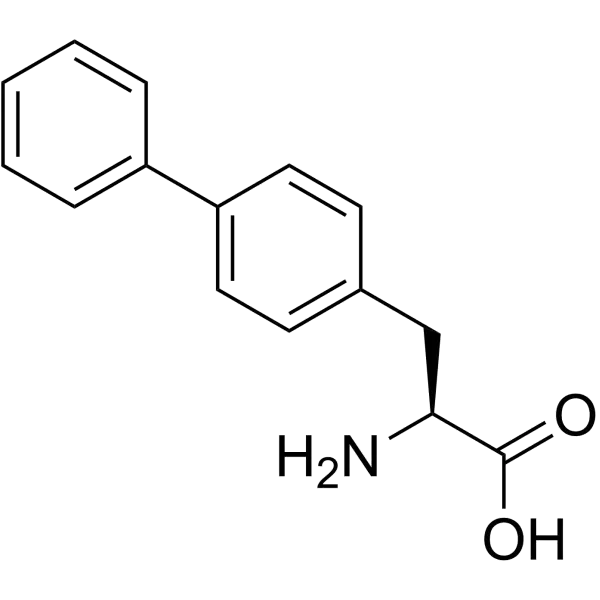
Biphenylalanine (Bip) is a highly sophisticated non-proteinogenic amino acid that has emerged as a powerful tool in modern peptide science and medicinal chemistry. Structurally, it is a derivative of phenylalanine where the phenyl side chain is extended by an additional phenyl ring, creating a rigid, lipophilic biphenyl moiety. This significant structural alteration does more than simply add bulk; it endows Bip with a unique combination of conformational rigidity, enhanced hydrophobic surface area, and the ability to engage in aromatic stacking interactions. Consequently, its strategic incorporation into peptides has become a cornerstone for designing molecules with improved proteolytic stability, target affinity, and membrane activity, making it an invaluable asset in the development of next-generation therapeutics and biomaterials.
Key Takeaways
- Biphenylalanine is a non-proteinogenic amino acid featuring a biphenyl side chain that provides exceptional conformational rigidity and lipophilicity.
- Its incorporation is a key strategy to enhance a peptide’s proteolytic stability and cell membrane permeability.
- Bip plays a critical role in antibacterial peptides, such as the ultrashort peptide UP-5, by promoting membrane disruption.
- It serves as a valuable building block for creating constrained collagen-binding peptides and peptidomimetics like GLP-1 analogs.
- Fmoc- and Boc-protected derivatives of Bip are commercially available as building blocks for standard solid-phase peptide synthesis (SPPS).
- Specialized providers such as LifeTein offer custom synthesis services, enabling researchers to incorporate Bip into complex peptide sequences.
Chemical and Structural Properties of Biphenylalanine
Defining the Biphenylalanine Structure
Biphenylalanine, also known as 2-amino-3-(biphenyl-4-yl)propanoic acid, is characterized by a phenyl ring directly attached to the β-carbon of the alanine backbone, which is itself linked to a second phenyl ring. This creates a rigid, extended aromatic system. Its molecular formula is C₁₅H₁₅NO₂, with a molecular weight of 241.29 g/mol. The compound is typically supplied as a white to off-white solid powder. A key feature is its atropisomerism, where rotation around the biaryl bond is restricted, giving rise to interconverting conformers that can influence peptide structure and function.
BIP as A Key Non-Proteinogenic Building Block
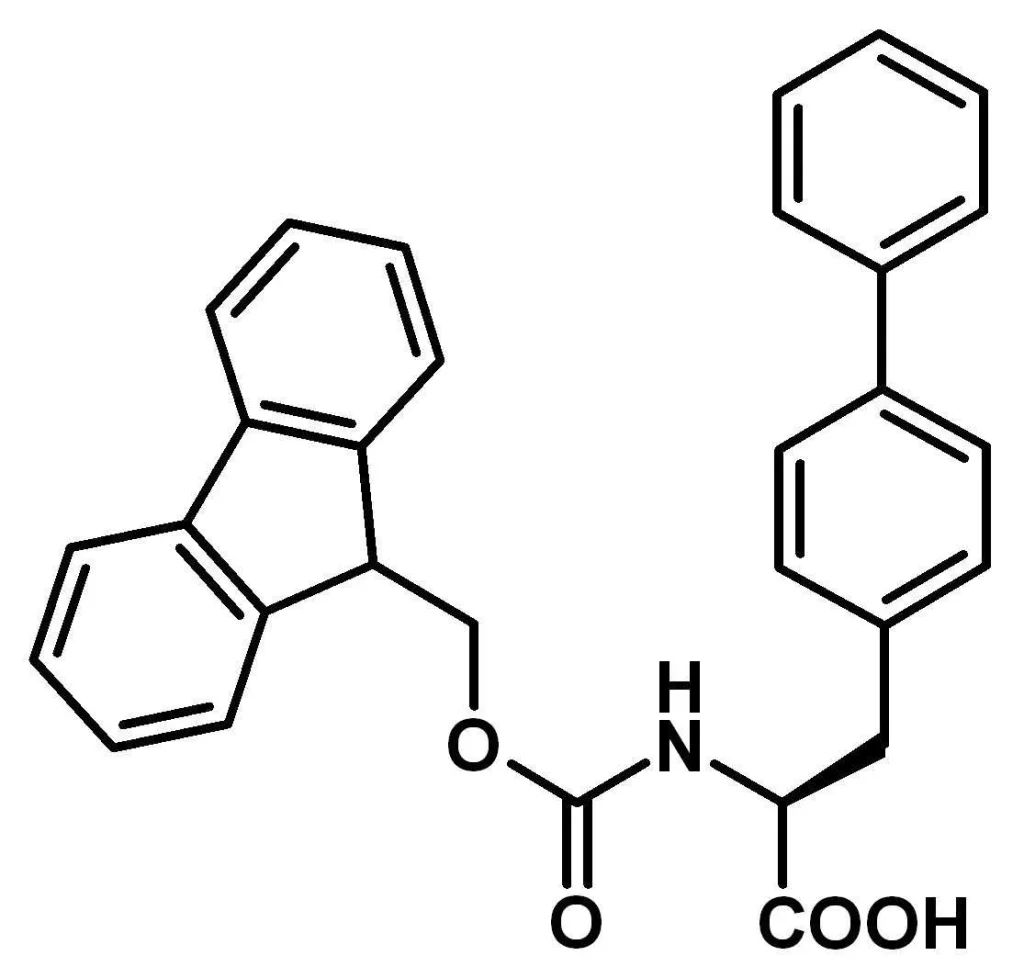
As a non-proteinogenic amino acid, Bip is not found in the standard genetic code. Its incorporation into peptides is achieved exclusively through chemical synthesis, typically using solid-phase peptide synthesis (SPPS). To facilitate this, Bip is commercially available as protected derivatives, most commonly Fmoc-Bip-OH (for Fmoc-based SPPS) and Boc-Bip-OH (for Boc-based SPPS). Advanced derivatives like Fmoc-N-Me-Bip-OH are also available for incorporating N-methylated biphenylalanine residues.
Find out more about peptide synthesis here.
Role of Biphenylalanine in Peptide Design
Engineering Peptide Stability and Affinity
The primary utility of Bip in medicinal chemistry is its ability to confer enhanced proteolytic stability and target affinity upon peptides. The bulky, rigid biphenyl group imposes conformational constraints that can lock the peptide into a bioactive conformation, improving its binding to a target receptor. Furthermore, its high lipophilicity can improve membrane permeability, a crucial property for developing orally available peptide drugs. It is a critical building block in the synthesis of peptidomimetics, such as GLP-1 analogs.
Driving Antibacterial Activity
Perhaps the most prominent application of Bip is in the field of antimicrobial peptides (AMPs). The hydrophobic biphenyl group is a key structural feature that enables ultrashort peptides to insert into and disrupt bacterial cell membranes. A prime example is the peptide UP-5, a penta-peptide designed using only arginine and biphenylalanine. The presence of Bip is critical for its potent antibacterial and antibiofilm activity against multidrug-resistant bacteria (MDRB). Molecular dynamics simulations have confirmed that Bip plays a pivotal role in promoting the antibacterial activity of these ultrashort peptides.
Probing Biological Interactions
Beyond drug discovery, Bip serves as a powerful tool for fundamental research. For instance, Bip has been incorporated into peptides to explore the structural requirements of collagen binding. Its rigid structure and unique interactions help scientists understand the molecular details of collagen recognition.
Synthetic Incorporation and Research Services
Solid-Phase Peptide Synthesis (SPPS)
The incorporation of Bip into a peptide sequence is a routine, yet specialized, procedure. Using standard SPPS protocols, researchers can couple Fmoc- or Boc-protected Bip derivatives to a growing peptide chain anchored to a solid resin. The synthesis of Fmoc-protected biphenylalanine derivatives has been advanced through methods like the nonaqueous Suzuki-Miyaura cross-coupling reaction. This allows for the efficient production of a variety of unnatural biaryl-containing amino acids.
Accessing Custom Bip-Containing Peptides
Given the specialized nature of these syntheses, researchers often rely on expert custom synthesis services to obtain high-quality Bip-containing peptides. Companies like LifeTein offer comprehensive platforms for peptide synthesis, including the incorporation of unusual amino acids like Bip. Their services ensure rigorous quality control through HPLC and MS reports, providing researchers with reliable tools for their advanced studies in immunology, oncology, and neuroscience.
Find out about high-speed RUSH synthesis.
Frequently Asked Questions (FAQ)
Is biphenylalanine a natural amino acid?
No, biphenylalanine is a non-proteinogenic amino acid, meaning it is not among the 20 standard amino acids encoded by DNA and is not naturally incorporated into proteins.
Why is biphenylalanine useful in peptide drugs?
Its unique structure provides three key benefits: enhanced proteolytic stability (resistance to degradation), improved target affinity (better binding), and increased membrane permeability, which is crucial for oral drug delivery.
How does biphenylalanine make a peptide antibacterial?
The rigid, hydrophobic biphenyl group helps the peptide insert into and disrupt bacterial cell membranes, a mechanism that is highly effective against multidrug-resistant bacteria. This is a key feature of peptides like UP-5.
Can I order a custom peptide with biphenylalanine?
Yes. Many specialized providers, such as LifeTein, offer custom peptide synthesis services that can incorporate unusual amino acids like Bip into your desired sequence.
What are common protected forms of Bip for synthesis?
For Fmoc-based solid-phase peptide synthesis (SPPS), the most common derivative is Fmoc-Bip-OH. For Boc-based SPPS, Boc-Bip-OH is used.
References
Qiao, J. X., Fraunhoffer, K. J., Hsiao, Y., Li, Y.-X., Wang, C., Wang, T. C., & Poss, M. A. (2016). Synthesis of Fmoc-Protected Arylphenylalanines (Bip Derivatives) via Nonaqueous Suzuki-Miyaura Cross-Coupling Reactions. The Journal of Organic Chemistry, 81(19), 9499–9506. https://doi.org/10.1021/acs.joc.6b01965
Zhao, L., Liu, L., Li, H., Zhao, L., & Cao, Z. (2022). Molecular dynamics simulations to study the role of biphenylalanine in promoting the antibacterial activity of ultrashort peptides. Journal of Molecular Graphics and Modelling, 117, 108282. https://doi.org/10.1016/j.jmgm.2022.108282