
Peptide-protein conjugation is a foundational technique in immunology, vaccine development, and diagnostic assay design. Because most peptides are inherently too small (typically <5,000 Da) to elicit a robust immune response on their own, they must be chemically linked to larger carrier proteins to stimulate T-helper cells and induce B-cell activation. Among the available carriers, including KLH, OVA, and CRM197, Bovine Serum Albumin (BSA) remains one of the most frequently employed. However, the decision to conjugate your peptide to BSA is far from automatic; it requires a careful assessment of your experimental goals, downstream applications, and potential pitfalls. This article provides a framework for determining whether BSA conjugation is the right choice for your research.
Key Takeaways
- BSA conjugation is essential for antibody production against small peptides, as peptides alone are insufficiently immunogenic.
- BSA offers high solubility, stability, and multiple conjugation sites (~30–35 accessible lysines), making it a versatile carrier.
- Do not use BSA conjugates for immunization if your endpoint assay (e.g., ELISA) uses BSA as a blocking agent, as this will generate false positives.
- For screening purposes, BSA conjugates are excellent coating antigens to verify antibody specificity against the peptide epitope.
- Alternative carriers like KLH are more immunogenic and are preferred for primary immunizations when BSA will be used in assays.
Why Conjugate a Peptide to a Carrier Protein?
The Immunogenicity Barrier
Synthetic peptides, typically 10–30 residues in length, are too small to be recognized effectively by the immune system. Without a carrier, they fail to cross-link B-cell receptors or activate T-helper cells, resulting in weak or absent antibody responses. Conjugation to a carrier protein overcomes this limitation by:
- Increasing molecular size, allowing the conjugate to be processed and presented by antigen-presenting cells.
- Providing multiple T-helper epitopes, which facilitate isotype switching and memory responses.
- Preventing immune tolerance, which can occur upon repeated exposure to a peptide alone.
BSA as a Carrier Protein: Properties and Advantages
Structural Characteristics
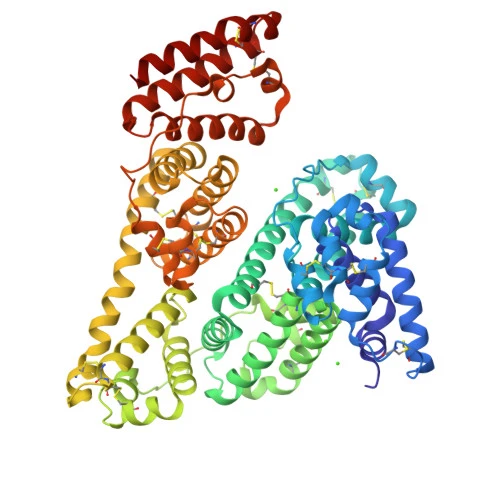
BSA is a plasma protein with a molecular weight of 66.5 kDa and contains 59 lysine residues, of which approximately 30–35 are accessible for conjugation. This abundance of primary amines provides numerous sites for covalent attachment of peptide antigens, enabling multiple peptide copies to be conjugated per BSA molecule. Additionally, BSA is highly soluble and stable, making it easy to work with in aqueous buffers.
Advantages Over Other Carriers
- Cost-effectiveness: BSA is relatively inexpensive and widely available.
- Solubility: Unlike KLH, which can appear cloudy due to its large size and limited solubility, BSA solutions remain clear.
- Versatility: BSA is compatible with multiple conjugation chemistries, including amine-reactive NHS-ester, glutaraldehyde, and maleimide-thiol coupling.
Find more peptide conjugation here.
When Should You Choose BSA Conjugation?
For Immunoassay Development and Screening
BSA conjugates are ideal for coating ELISA plates or serving as capture antigens in screening workflows. Because BSA is widely used as a blocking agent, BSA-peptide conjugates allow you to verify that antibodies raised against your peptide are specific to the peptide epitope rather than the carrier protein. This is particularly valuable when the primary immunogen uses a different carrier, such as KLH.
For Long-Term Peptide Storage
BSA can also serve as a stabilizing agent for peptide storage. For example, LifeTein recommends adding a carrier protein such as 0.1% HSA or BSA to peptides like Melanotan-II for long-term storage below -18°C.
When Should You Avoid BSA Conjugation?
The Blocking Agent Conflict
The most significant limitation of BSA is its ubiquitous use as a blocking agent in immunoassays (e.g., ELISA, Western blot). If you immunize an animal with a peptide-BSA conjugate, the resulting antiserum will contain antibodies against both the peptide and BSA. When this antiserum is subsequently used in an assay that employs BSA for blocking, the anti-BSA antibodies will bind to the blocking agent, generating false-positive signals.
The Immunogenicity Trade-off
BSA is less immunogenic than KLH, which is why KLH remains the carrier of choice for primary immunizations. If your primary goal is to generate high-titer antibodies against a weakly antigenic peptide, KLH may be a more effective choice.
Conjugation Chemistry and Practical Considerations
Available Functional Groups
Peptides offer three primary functional groups for conjugation: amino (-NH₂), carboxyl (-COOH), and thiol (-SH). Among these, the thiol group of cysteine is often the most effective for site-specific bioconjugation. For BSA conjugation, maleimide-activated BSA enables efficient coupling to cysteine-containing peptides.
Determining the Peptide-to-Protein Ratio
To quantify the number of peptide copies conjugated per BSA molecule, researchers analyze the amino acid content of both the conjugate and the native carrier. By comparing the ratio of an amino acid present only in the carrier to one present in both the peptide and carrier, the degree of labeling can be calculated.
Find out more about peptide synthesis here.
Frequently Asked Questions (FAQ)
Why can’t I just use my peptide alone for immunization?
Peptides are typically too small (under 5,000 Da) to be recognized effectively by the immune system. They lack the T-helper epitopes needed to stimulate a robust B-cell response. Conjugation to a carrier protein like BSA provides the necessary molecular size and T-cell epitopes to generate high-titer antibodies.
Can I use the same BSA conjugate for both immunization and ELISA?
No. If you use a peptide-BSA conjugate for immunization, the resulting antiserum will contain antibodies against BSA. When this antiserum is used in an ELISA that employs BSA as a blocking agent, you will observe false-positive signals due to anti-BSA antibodies binding to the blocker. The standard practice is to immunize with a KLH conjugate and screen with a BSA conjugate.
How does BSA compare to KLH as a carrier?
KLH is more immunogenic and is the preferred carrier for primary immunizations. However, KLH has limited solubility and can appear cloudy in solution. BSA is more soluble, stable, and cost-effective, making it ideal for coating antigens in immunoassays. The choice depends on your application: use KLH for immunization and BSA for screening.
Can I conjugate any peptide to BSA?
Most peptides can be conjugated to BSA, provided they contain a suitable functional group (amine, thiol, or carboxyl). For optimal results, it is recommended to include a cysteine residue in the peptide sequence to enable site-specific maleimide-thiol conjugation. LifeTein and other providers offer custom peptide conjugation services to facilitate this process.