
Peptide-carrier protein conjugation is a cornerstone technique in immunology, enabling the production of high-affinity antibodies against small peptide antigens. Because peptides alone (typically <5,000 Da) are too small to elicit a robust immune response, they must be chemically linked to larger carrier proteins that provide T-helper epitopes and stimulate B-cell activation. Among the available carriers, including KLH, BSA, and CRM197, Ovalbumin (OVA) occupies a distinct niche. However, the decision to conjugate your peptide to OVA is not interchangeable with other carriers; it requires a clear understanding of OVA’s unique properties, its optimal role in antibody workflows, and its limitations. This article provides a framework for determining whether OVA conjugation is the right choice for your research.
Key Takeaways
- OVA (Ovalbumin) is a ~45 kDa glycoprotein isolated from chicken egg whites, widely used as a secondary carrier protein for screening and confirmation assays.
- Do not use OVA for primary immunizations if your goal is to generate high-titer antibodies; KLH is the gold standard for this purpose due to its superior immunogenicity.
- OVA’s primary value lies in its role as an independent carrier for ELISA coating and specificity screening, allowing you to confirm that antibodies target the peptide epitope rather than the carrier protein.
- OVA offers advantages in specific research contexts, such as invertebrate studies where mammalian proteins like BSA may cause cross-reactivity.
- OVA contains 20 lysine residues (21 primary amines including the N-terminus), providing multiple conjugation sites for peptide coupling.
- Custom OVA conjugation services are available through specialized providers like LifeTein, enabling researchers to obtain high-quality conjugates for their specific applications.
Why Conjugate a Peptide to OVA?
The Immunogenicity Barrier
Synthetic peptides are inherently poor immunogens due to their small size. Without a carrier, they fail to cross-link B-cell receptors or activate T-helper cells effectively. Conjugation to a carrier protein like OVA overcomes this limitation by:
- Increasing molecular size, allowing the conjugate to be processed and presented by antigen-presenting cells.
- Providing T-helper epitopes, which facilitate isotype switching and memory responses.
- Preventing immune tolerance, which can occur upon repeated exposure to a peptide alone.
OVA’s Distinctive Properties
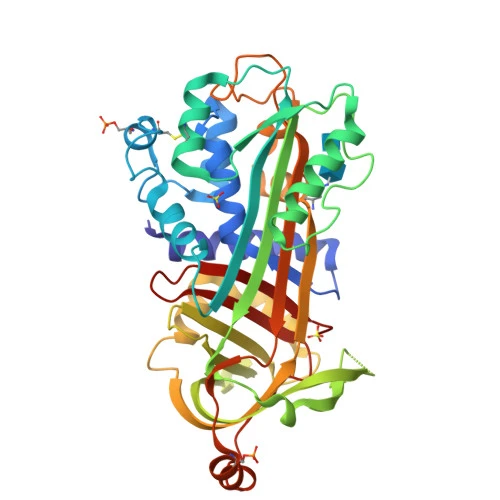
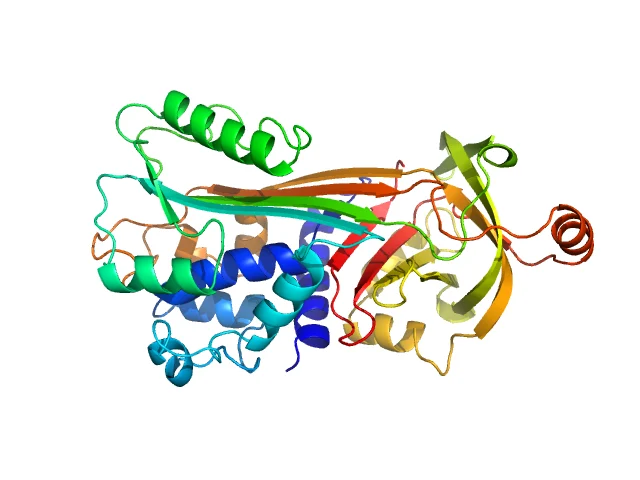
OVA is the major protein of chicken egg whites, with a molecular weight of approximately 45 kDa. It is a well-characterized, single-domain glycoprotein with a known immunogenicity profile. Unlike BSA (67 kDa) or KLH (up to 13,000 kDa), OVA offers a mid-size carrier option that balances solubility, stability, and immunogenicity.
Find more peptide conjugation here.
When Should You Choose OVA Conjugation?
For Specificity Screening and ELISA Coating
The primary and most compelling use of OVA conjugates is as a secondary carrier for screening and confirmation assays. The standard workflow in antibody production involves:
- Immunizing with a KLH-peptide conjugate (KLH is more immunogenic).
- Screening the resulting antiserum using an OVA-peptide conjugate in ELISA.
This approach is critical because the immune system reacts to the entire peptide-protein conjugate, meaning antibodies will be raised against the peptide, the linker, and the carrier protein. By using a different carrier for screening (OVA) than for immunization (KLH), you can confirm that antibodies are specific to the peptide epitope rather than the carrier backbone. As LifeTein notes, OVA is “often used as a second carrier protein to confirm that antibodies are specific for the peptide rather than the carrier protein (e.g. BSA)”.
For Studies Involving Invertebrate Species
If your research involves invertebrate models, OVA is an excellent choice. Because OVA is derived from chicken, it is phylogenetically distant from mammalian proteins, reducing the risk of cross-reactivity that could arise when using mammalian carriers like BSA.
For Competitive Assay Formats
Matched BSA and OVA conjugates support advanced assay formats, including competitive ELISA, where the use of two different carriers helps distinguish true peptide-specific binding from carrier-directed signals.
For Long-Term Peptide Storage
Similar to BSA, OVA can serve as a stabilizing agent for peptide storage, improving solubility and preventing aggregation.
When Should You Avoid OVA Conjugation?
For Primary Immunizations
OVA is not the optimal choice for primary immunizations. Its immunogenicity is significantly lower than KLH, which remains the gold standard carrier for generating high-titer antibodies. As one source notes, “KLH is the gold standard for primary immunization due to its massive size and immunogenicity, while BSA and OVA are reserved for downstream ELISA screening”. If your goal is to maximize antibody titers, KLH is the preferred carrier.
When OVA Itself Is the Target of Study
If your research involves chicken ovalbumin as a protein of interest (e.g., studying the OVA-specific immune response in mouse models), using OVA as a carrier would introduce confounding variables. In such cases, alternative carriers like KLH, BSA, or CRM197 should be considered.
Conjugation Chemistry and Practical Considerations
Available Functional Groups
OVA contains 20 lysine residues, providing 21 primary amines (including the N-terminus) available for conjugation. The most common conjugation strategies include:
- NHS-ester chemistry: Targets primary amines (lysine residues) for peptide coupling.
- Maleimide-thiol chemistry: Enables site-specific conjugation to cysteine-containing peptides.
- SMCC crosslinking: A heterobifunctional linker that couples amine-containing peptides to thiol-activated OVA.
Conjugation Ratios and Immunogenicity
Research has shown that the conjugation ratio and molecular orientation of the peptide on the carrier can influence antibody affinity and titer. Optimizing these parameters is essential for generating high-quality antibodies.
Commercial Availability
Specialized providers such as LifeTein offer custom OVA conjugation services as part of their peptide modification portfolio. Their services include conjugation to KLH, BSA, OVA, CRM197, and Blue Carrier Protein, with rigorous quality control to ensure high-purity conjugates.
Find out more about peptide synthesis here.
Frequently Asked Questions (FAQ)
What is the primary use of OVA-peptide conjugates?
The primary use of OVA-peptide conjugates is as a secondary carrier for screening and confirmation assays, particularly ELISA. They are used to confirm that antibodies generated against a peptide are specific to the peptide epitope rather than the carrier protein.
Can I use OVA for primary immunization instead of KLH?
While technically possible, OVA is not recommended for primary immunizations due to its lower immunogenicity compared to KLH. KLH remains the gold standard for generating high-titer antibodies against peptide antigens.
Why do I need a different carrier for immunization and screening?
The immune system generates antibodies against both the peptide and the carrier protein. If you use the same carrier for immunization and screening (e.g., BSA for both), you will detect antibodies against the carrier, leading to false-positive signals. Using a different carrier for screening (e.g., OVA) ensures that you are detecting only peptide-specific antibodies.
How does OVA compare to BSA as a carrier?
OVA (45 kDa) is slightly smaller than BSA (67 kDa). Both are used as secondary carriers for screening. However, because BSA is ubiquitously used as a blocking agent in immunoassays, OVA is often preferred for screening to avoid cross-reactivity with anti-BSA antibodies that may be present in the antiserum.