Product Name | mUNO-CSPGAK |
Product Quantity | 4mg |
Catalog Number | 5674-02 |
Category | mUNO Peptide |
Sequence | H-CSPGAK-OH |
Product Description | 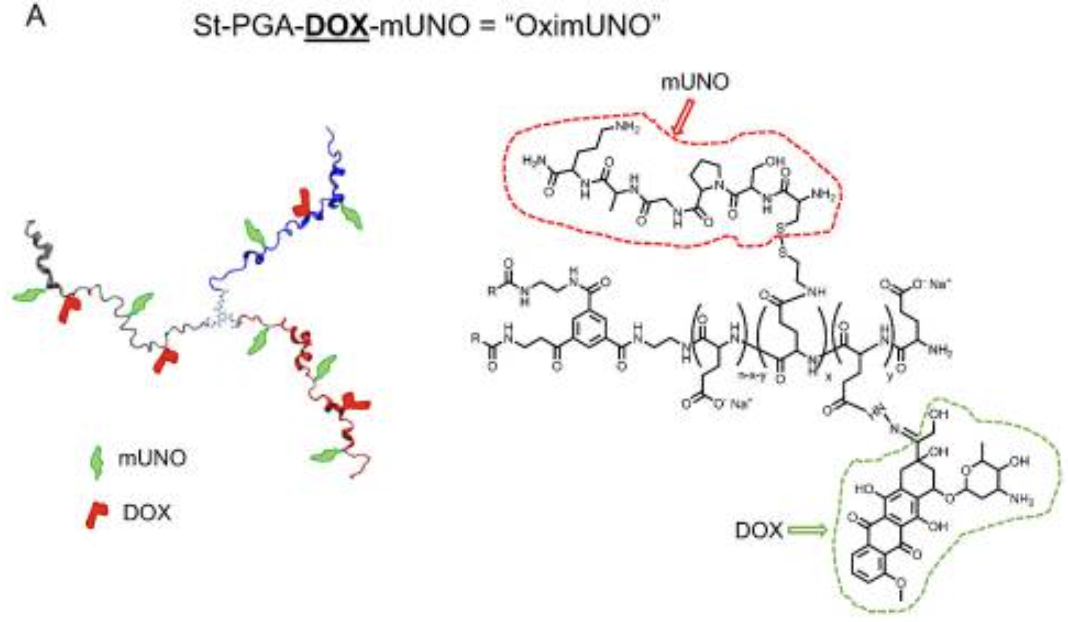
UNO selectively targets Mannose Receptor (CD206/MRC1)-expressing Tumor-Associated Macrophages (TAMs), contributing to the suppression of tumor growth, angiogenesis, metastasis, and relapse. It was found that TAM-depleting agent (“OximUNO”) specifically targets CD206+ TAMs and demonstrated efficacy in a triple-negative breast cancer (TNBC) mouse model. Treatment with OximUNO reduced the progression of primary tumor lesions. The short linear peptide (CSPGAK, "mUNO") can be used for the delivery of molecular and nanoscale cargoes in M2 TAMs in vitro and for in vivo targeting of early-stage primary breast tumors. |
Scientific Background | mUNO-CSPGAK is a 6-residue synthetic peptide with the sequence Cys-Ser-Pro-Gly-Ala-Lys. The sequence contains 1 cysteine residue, providing potential thiol/disulfide chemistry when the thiol is available. These sequence-derived properties describe the reagent chemically; no specific receptor, enzyme, pathway, disease association, or biological activity is assigned without product-specific experimental evidence. |
Research Applications | - thiol-selective conjugation or immobilization studies
- LC-MS/HPLC analytical method development
- sequence-specific assay controls
|
Experimental Notes | Sequence-derived chemical properties support reagent selection and experimental planning but do not establish biological function. Solubility, aggregation, adsorption, conjugation efficiency, and assay performance should be validated under the intended experimental conditions. |
Reference | Lepland A, Malfanti A, Haljasorg U, Asciutto EK, Pickholz M, Bringas M, Peterson P, Teesalu T, Vicent MJ, Scodeller P. Depletion of Mannose Receptor-Positive Tumor-associated Macrophages via a Peptide-targeted Star-shaped Polyglutamate Inhibits Breast Cancer Progression in Mice. Cancer Res Commun. 2022 Jun 28;2(6):533-551. doi: 10.1158/2767-9764.CRC-22-0043. PMID: 36923553; PMCID: PMC10010335. |