A peptide is a chain of amino acids joined by amide bonds. Almost all research peptides are built chemically rather than biologically, one residue at a time, on a solid support — a method called solid-phase peptide synthesis (SPPS). This page explains how that works, why protecting groups are the heart of the method, and how to read the two numbers that come back on a certificate of analysis: chromatographic purity and net peptide content. They measure different things, and neither one alone tells you how much peptide is in the vial.
Peptides and proteins are linear polymers of amino acids linked by amide bonds, conventionally called peptide bonds. Each bond forms between the carboxyl group of one residue and the amino group of the next, with the loss of a water molecule.
Every standard amino acid has the same core architecture: an alpha carbon bearing an amino group, a carboxyl group and a variable side chain (R) that gives the residue its character and drives how the finished chain folds. Proline is the one structural exception worth noting, and it is often described imprecisely. Proline does have an alpha carbon and a carboxyl group like every other residue. What differs is its nitrogen: the side chain loops back and bonds to it, so proline's amino group is a secondary amine held inside a five-membered ring rather than a free primary amine. That ring is why proline resists certain colorimetric tests and why it constrains the backbone so strongly.
Carboxylic acids are not reactive enough to form amide bonds on their own under mild conditions. The carboxyl group has to be chemically activated first, which is the job of the coupling reagents shown further down this page.
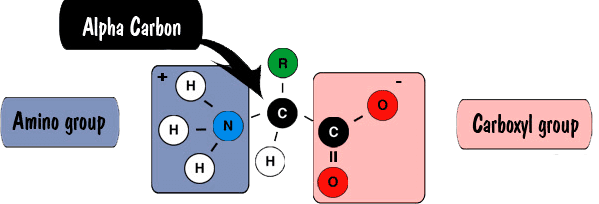
Fig. 1: Peptide Structure
There are two classical approaches. In solution-phase (liquid-phase) synthesis the growing chain stays dissolved and is isolated after each step. It remains useful for very short peptides such as di- and tripeptides, and for C-terminally modified compounds such as enzyme substrates, where the economics of handling a soluble intermediate still work. In solid-phase synthesis the chain is anchored to an insoluble resin, so excess reagents and soluble by-products are removed simply by washing and filtering. That single change is what made routine peptide synthesis practical, and it is LifeTein's standard process.
A third option matters for long targets. Peptides and small proteins beyond the comfortable reach of stepwise assembly can be built from two or more fragments that are each made by SPPS and then joined. The best established of these methods is native chemical ligation, in which a fragment carrying a C-terminal thioester reacts chemoselectively with a fragment bearing an N-terminal cysteine; the initial thioester-linked intermediate then rearranges spontaneously to a normal peptide bond.
Whichever route is used, the whole exercise depends on selective protection: the amino group, the alpha-carboxyl group and the reactive side chains must each be masked and unmasked on a schedule, so that only the intended bond forms at each step.
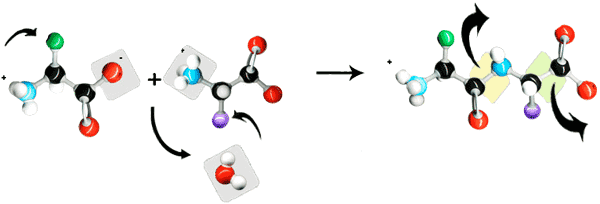
Fig. 2: Peptide bonds created with peptide coupling agents
SPPS is a loop. The peptide is anchored to the resin through its C-terminus and extended one residue at a time toward the N-terminus. Note the direction: the ribosome builds proteins from the N-terminus to the C-terminus, whereas conventional stepwise SPPS runs the other way, from C to N. This is a property of the stepwise chemistry, not of synthetic peptides in general — fragment ligation and solution-phase routes assemble chains differently.
A single cycle consists of:
The cycle repeats until the sequence is complete. The peptide is then cleaved from the resin and the side-chain protecting groups are removed, usually in the same acid treatment.
The workhorse resin is polystyrene lightly cross-linked with divinylbenzene, typically at one to two percent. At that cross-link density the beads swell substantially in the solvents used for SPPS, which matters more than it might sound: the chemistry happens throughout the swollen bead rather than only on its outer surface, so good solvation of the resin is a precondition for good coupling. Polystyrene is chemically inert under synthesis conditions, mechanically robust enough to survive repeated agitation, and filters cleanly. Polyacrylamide and polyethylene glycol based supports, and PEG-polystyrene hybrids, are also widely used; the more polar supports can solvate difficult, aggregation-prone sequences better than plain polystyrene. More heavily cross-linked and macroporous supports trade swelling for mechanical rigidity, which is useful in flow and large-scale reactors.
The resin also carries a linker, and the linker is a design decision rather than a detail. It determines what the C-terminus becomes on cleavage — a free acid, an amide, or a protected fragment suitable for ligation — and how harsh the cleavage has to be.
Amino acids carry reactive groups at the N-terminus, the C-terminus and on many side chains, and all of them would react if left free. Synthesis therefore uses two tiers of protection that must be removable independently of each other.
The temporary group sits on the alpha-amino nitrogen and is removed at the start of every cycle, so it has to come off quickly and cleanly under conditions that leave everything else untouched. The semi-permanent groups mask the side chains and the resin linkage. They have to survive every one of those repeated deprotections — dozens of them in a long synthesis — and come off only at the end. The requirement that the two tiers respond to chemically different triggers is the organising principle of the whole method, and it is the reason the two main strategies are named after the pair of protecting groups they use rather than after a single reagent. Premature loss of a side-chain group exposes a reactive functionality mid-synthesis, and the result is a branched or otherwise modified by-product that often co-purifies with the target.
In Fmoc/tBu chemistry the temporary group is the base-labile Fmoc group, removed with a secondary amine — conventionally about 20% piperidine in DMF, sometimes with an additive or a stronger base for sequences that resist deprotection. Because Fmoc comes off with base and is stable to acid, the side chains can be protected with acid-labile groups that the basic deprotection step simply ignores. Those groups are tert-butyl based: tert-butyl esters and ethers, Boc on lysine and tryptophan nitrogens, trityl and its relatives on cysteine, histidine and the amide side chains. They are removed at the end with trifluoroacetic acid, which also cleaves the peptide from most Fmoc-compatible resins, so final cleavage and side-chain deprotection happen in one step.
A correction worth making explicitly. Benzyl-based side-chain protection does not belong to Fmoc chemistry and is not mildly acid-labile. Benzyl groups are the side-chain set for the Boc/Bzl strategy, and removing them takes strong acid — typically anhydrous hydrogen fluoride. Boc itself is a point of genuine overlap and is a common source of confusion: Boc serves as the temporary alpha-amino group in Boc/Bzl chemistry, and also appears as a TFA-labile side-chain group in Fmoc/tBu chemistry. The group is the same; the role it plays is not.
In Boc/Bzl chemistry the polarity is reversed. The temporary Boc group is removed with TFA at every cycle, so the side-chain groups and the resin linkage must tolerate repeated acid treatment, and the final cleavage then requires an acid stronger still. That final HF step needs specialised apparatus and constrains both batch size and reactor choice. The strategy retains real advantages for strongly aggregating sequences and for making C-terminal thioesters for ligation, but it is no longer the default.
Fmoc/tBu dominates routine work. Its cycles involve no corrosive acid, it automates readily, it scales without special containment, and the fluorene by-product released on deprotection absorbs strongly in the UV, which gives a convenient real-time readout of how well each deprotection went.
| Fmoc/tBu | Boc/Bzl | |
|---|---|---|
| Alpha-amino group removed by | Base (piperidine in DMF) | Acid (TFA), every cycle |
| Side-chain protection | tert-Butyl based, TFA-labile | Benzyl based, HF-labile |
| Final cleavage | TFA | Anhydrous HF |
| Equipment | Standard; readily automated | Specialised HF-resistant apparatus |
| Handling risk | Comparatively low | Significant; HF requires containment |
| Suits | Routine work, acid-sensitive modifications, phospho- and glycopeptides | Strongly aggregating sequences, base-labile targets, thioester fragments |
| Scale-up | Straightforward | Limited by the cleavage step |

Fig. 3: Fmoc Strategy (Wang resin)

Fig. 4: Boc Strategy (Merrifield resin)
Once the alpha-amino group is free, the next residue is coupled by activating its carboxyl group. A large family of reagents does this — carbodiimides, and the phosphonium and aminium or uronium salts such as HBTU, HATU, PyBOP and COMU — generally used with an additive that suppresses racemisation and an organic base.
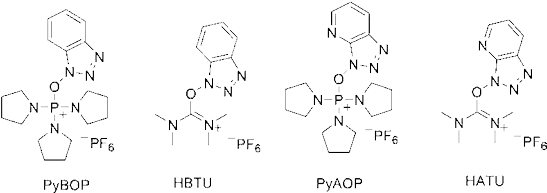
Fig. 5: Examples of coupling agents.
Progress is checked with a colour test, most commonly the Kaiser (ninhydrin) test, which detects free primary amines on the resin. Reading it correctly depends on knowing which step you are testing, and the logic is opposite in the two cases:
Two caveats matter in practice. The test consumes the small resin sample it is run on, and it is unreliable for secondary amines: a residue whose nitrogen sits in a ring, proline above all, gives an ambiguous red-brown colour rather than a clean result, which is why a separate isatin-based test exists for terminal proline. Where a quantitative figure is wanted rather than a yes-or-no answer, the ninhydrin reaction can be run quantitatively to estimate the proportion of unreacted amine.
When the sequence is finished, acidolytic cleavage releases the peptide from the resin and removes the side-chain protecting groups. The cocktail includes scavengers, whose job is to trap the reactive cations that those protecting groups generate as they come off; without them, the released cations alkylate sensitive residues such as tryptophan, methionine, cysteine and tyrosine, and the alkylated peptides can be difficult to separate from the target afterwards.
The crude peptide is typically precipitated from the cleavage mixture with cold diethyl ether, then collected, dissolved in water or dilute aqueous acid, and filtered to remove the resin. Further purification follows by reversed-phase HPLC, and where the peptide's properties warrant it, by gel filtration or ion-exchange chromatography.
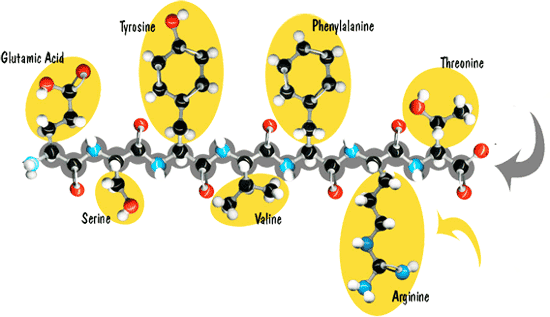
Fig. 6: Polypeptide formation
A good deal of research needs peptides well beyond the length at which stepwise synthesis stays efficient. Yield falls off with every additional cycle, and difficult sequences aggregate on the resin, which makes both deprotection and coupling less complete. Beyond roughly 50 residues, assembling the target from fragments usually beats extending a single chain.
LifeTein's PeptideSyn™ approach applies chemical ligation to this problem. Unprotected fragments, each made by SPPS and purified on its own, are joined chemoselectively in aqueous solution; the common form of the reaction pairs a peptide thioester with a fragment carrying an N-terminal cysteine. Because each fragment can be purified before ligation, difficult full-length sequences become tractable where a single long assembly would not.
Purification after ligation still has to be done properly. Unreacted fragments are the most obvious species to remove, but depending on the chemistry there may also be hydrolysed thioester, side products from the ligation itself, and impurities carried through from the fragments. This is routine work at LifeTein for research-grade long peptides, and it has let us deliver sequences that are genuinely difficult to make by stepwise synthesis alone. Whether any particular target is feasible depends on its sequence, and we will say so before you order rather than after.
Acidolytic cleavage gives a crude product containing the target alongside a predictable set of impurities: deletion and truncated sequences, incompletely deprotected peptides, modified peptides, scavenger adducts and by-products derived from the protecting groups themselves. The difficulty is that these are structurally very similar to the target, which rules out most simple separations.
Reversed-phase HPLC on C18-modified silica is the standard answer, because it separates on hydrophobicity and so resolves species that differ by only a residue or a single modification. A typical run starts in aqueous 0.1% TFA, elutes polar contaminants early, and then raises the proportion of acetonitrile progressively; elution is monitored in the 214–220 nm region, where the peptide bond absorbs. Fractions that analytical HPLC shows to be sufficiently pure are pooled and lyophilised.
For preparative work the column packing has to hold up to all of this: chemically stable enough that the same column tolerates acidic, neutral and basic eluents, with a pore size large enough to admit the largest peptides in the batch without sacrificing capacity for small ones, and a narrow, spherical particle size distribution so the bed packs reproducibly and stays permeable under pressure.
Purity is determined by analytical reversed-phase HPLC with UV detection, conventionally at 214 or 220 nm, where amide bonds absorb. It is reported as the peak-area percentage: the area of the target peak divided by the total integrated peak area, expressed as a percentage.
It is worth being precise about terminology here, because two distinct quantities get confused. That peak-area percentage is not chromatographic resolution. Resolution describes how well two adjacent peaks are separated from each other, as a function of their retention difference and their widths. Resolution is what determines whether a purity figure is trustworthy — poorly resolved impurities get integrated into the main peak and inflate the number — but the two are not the same measurement. Resolution is improved by optimising the buffer system, stationary phase, gradient and column temperature, and interpreting the resulting chromatograms well depends considerably on the analyst's judgement.
Two limits apply to any purity figure. It is a UV response under one specified method, so it is not strictly a mass percentage: components that co-elute with the target, or absorb weakly at the detection wavelength, are under-represented. And it only accounts for what the method detects at all — water, residual salts and counterions are largely invisible to it.
Net peptide content (NPC) answers the question purity cannot: of the material actually in the vial, how much is peptide? It is a mass fraction — the mass of peptide as a percentage of the total mass of supplied material, by the stated analytical method, usually amino acid analysis.
The remainder is non-peptide mass: bound water, residual salts, and counterions. Peptides are normally delivered as the TFA salt, which is the natural consequence of RP-HPLC purification in TFA-containing eluents; the side chains of arginine, lysine and histidine and the free N-terminus form trifluoroacetates, and additional TFA can be retained non-covalently. None of this registers in the HPLC purity percentage. Hydrophilic and strongly basic peptides take up the most water and counterion mass, so they tend to show the lowest NPC, and the figure varies between batches with the final purification and lyophilisation conditions.
The practical consequence. Purity and net peptide content are independent, and you need both. A peptide can be 98% pure by HPLC and still be well under 98% peptide by weight. If you weigh out lyophilised powder and assume it is all peptide, your stock concentration will be wrong by however much non-peptide mass is present — and that error propagates straight into every Kd, IC50 and specific activity you calculate. For any quantitative experiment, set the concentration using net peptide content or amino acid analysis.
The impurities worth knowing about are deletion sequences missing one or more residues, truncated peptides, incompletely deprotected sequences, and by-products formed during synthesis or cleavage.
Purity varies between batches, and a specification is a floor rather than a target: material ordered at 90% may arrive anywhere from 90% to the high nineties, and lower specifications generally come with wider spread. This matters more than it appears, because peptide-related by-products are chemically close to the target and can be biologically active without matching the target's activity, and in some assays they interfere directly. Net peptide content varies between batches too, with amino acid composition, lyophilisation and storage conditions. Where batch-to-batch consistency is part of the experiment — a dose-response series, or anything that will be compared across time — order enough of a single batch to finish the work, and keep the certificate of analysis with the data.
General guidance of the kind given on this page describes what is typical. The figures that apply to your material are the ones on its certificate of analysis, and those are the ones to use.
Email your project details to sales@lifetein.com or use our online quotation form. If a sequence looks difficult — strongly aggregating, very long, or carrying an awkward combination of modifications — we will tell you what the realistic options are before you order.
LifeTein supplies peptides for research use only. They are not drugs, foods or cosmetics, and must not be used for diagnostic or therapeutic purposes, or administered to humans or animals.