


Peptide antigen design is one of the most important steps in peptide-based antibody production. A well-designed peptide can improve the likelihood that the resulting antibody recognizes the intended target with useful specificity and titer, while a poorly chosen peptide may generate antibodies that are weak, non-specific, or difficult to validate.
At LifeTein, peptide antigen design is closely tied to our peptide synthesis and antibody services. This is especially important for peptide-to-polyclonal antibody projects, where the designed peptide is later used for synthesis, carrier conjugation, immunization, and peptide affinity purification.
| Length | |
| Molecular Weight (Monoisotopic) | |
| Molecular Weight (Average) | |
| Single-letter format | |
| Three-letter format |
1. Sequence specificity and homology
In some projects, the best antigen is a unique sequence that helps maximize specificity to one target protein. In other projects, a conserved sequence may be preferred if cross-reactivity across homologs or species is desired.
2. Surface exposure and flexibility
Peptide antigens are often chosen from regions that are predicted to be accessible, hydrophilic, and relatively flexible. Surface-exposed loop-like regions are frequently better candidates than buried hydrophobic regions, although the exact context matters.
3. Continuous vs. discontinuous epitopes
Most peptide antibody projects are aimed at continuous linear epitopes. Discontinuous or conformational epitopes can sometimes be targeted, but peptide-based success depends much more heavily on whether the synthetic peptide meaningfully resembles the relevant structural feature of the native target.
4. N- or C-terminal targeting
When the goal is to reduce the chance that the epitope is buried inside the folded protein, N-terminal or C-terminal regions are often considered first. However, strongly hydrophobic termini, especially in membrane proteins, may be poor antigen choices.
5. Peptide length
A practical range for many peptide antibody projects is around 8–20 amino acids. Peptides that are too short may lack specificity, while longer peptides are not always better and may introduce synthesis or specificity problems.
6. Solubility and synthesis feasibility
Hydrophobic sequences, multiple cysteines, repeated prolines, highly aggregation-prone motifs, and other difficult features can affect synthesis, purification, conjugation, and downstream assay performance. This is one reason peptide antigen design should not be separated from peptide synthesis experience.
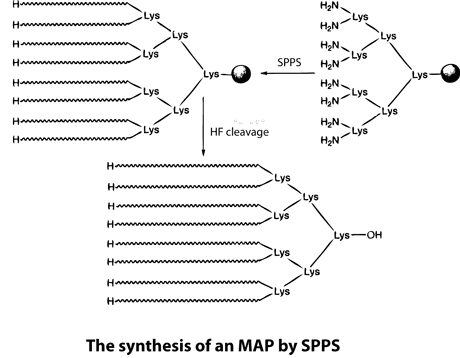
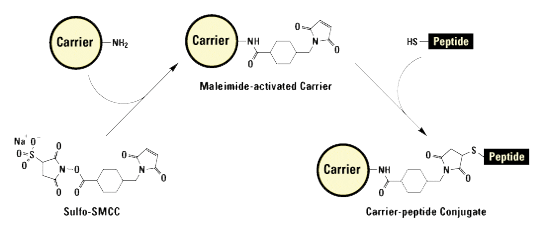
Most peptide antigens are too small to produce a strong immune response on their own, so they are commonly conjugated to a carrier protein such as KLH. In many workflows, peptide-KLH is used for immunization and peptide-BSA is used for ELISA or screening applications.
For peptide antibody projects, AI-assisted analysis can support antigen design by helping evaluate sequence exposure, surface probability, hydrophilicity, likely accessibility, and synthesis practicality alongside the intended specificity goal.
This is most useful when combined with real peptide synthesis experience, since the best antigen region is not only biologically relevant but also practical to produce and validate.
Learn more on our AI-Assisted Peptide Design and Manufacturing page.