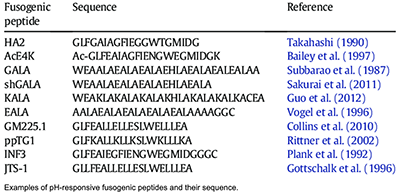
KALA vs. RALA Amphipathic Peptides Amphipathic α-helical peptides such as KALA and RALA are widely used in non-viral delivery systems for nucleic acids and intracellular cargo. While both peptides share a common structural framework optimized for membrane interaction and electrostatic complex formation, RALA was engineered to improve delivery performance under physiological conditions and reduce cytotoxicity. Structural and Functional Comparison | Feature | KALA Peptide | RALA Peptide | | Peptide Class | Amphipathic α-helical peptide | Engineered amphipathic α-helical peptide | | Sequence Design | Lysine-rich membrane-active motif | Arginine-rich optimized delivery motif | | Charge Distribution | Strong cationic character | Enhanced cationic density with improved buffering capacity | | Helical Stability | Forms α-helix in lipid environments | Stable α-helix with improved membrane interaction | | pH Responsiveness | Moderate | Enhanced (histidine-mediated endosomal escape) |
RALA is a synthetic amphipathic, arginine-rich peptide derived from the well-characterized KALA peptide family and engineered to enhance nucleic acid delivery efficiency under physiological conditions. The peptide adopts an α-helical structure in membrane-mimetic environments and exhibits pH-responsive membrane interaction properties that facilitate cellular uptake and endosomal escape. RALA has been widely reported as a non-viral gene delivery vector capable of condensing plasmid DNA, siRNA, mRNA, and other nucleic acids into nanoscale complexes suitable for cellular internalization. Compared with earlier amphipathic peptides, RALA demonstrates improved stability, reduced cytotoxicity, and enhanced transfection efficiency in multiple mammalian cell systems. Applications in Drug and Biomedical Research RALA is extensively used in the development of advanced nucleic acid therapeutics and delivery technologies: Gene Therapy Research - Plasmid DNA delivery
- CRISPR/Cas system transport
- Reporter gene transfection studies
- Functional genomics screening
RNA Therapeutics - siRNA and shRNA delivery
- mRNA vaccine platform research
- microRNA modulation studies
- antisense oligonucleotide transport
Cancer and Precision Medicine - Tumor-targeted gene expression studies
- Combination delivery with chemotherapeutics
- Immune modulation research
- Nanoparticle-based therapeutic systems
Nanomedicine and Biomaterials - Peptide–polymer hybrid delivery systems
- Liposomal and nanoparticle surface functionalization
- Tissue-specific targeting studies
- Intracellular trafficking investigations
Advantages of RALA Peptide Systems Researchers have reported several key advantages of RALA-based delivery platforms: - Efficient nucleic acid condensation and protection
- Enhanced endosomal escape capability
- Reduced cytotoxicity compared with traditional cationic polymers
- Scalability for translational research
- Compatibility with multiple nanoparticle formulations
- Stability across physiologically relevant conditions
Molecular Details Electrostatic nucleic acid condensation
The positively charged arginine residues promote strong binding to negatively charged nucleic acids, forming stable peptide–cargo nanoparticles. pH-dependent membrane interaction
Histidine residues contribute to buffering capacity and facilitate endosomal escape through proton sponge effects, enabling cytoplasmic release of cargo. Amphipathic α-helix formation
The alternating hydrophobic and cationic residues support membrane insertion and transient destabilization of lipid bilayers, enhancing intracellular delivery. Low immunogenicity profile
RALA complexes have been reported to exhibit reduced inflammatory responses relative to viral delivery platforms, making them suitable for translational research. |