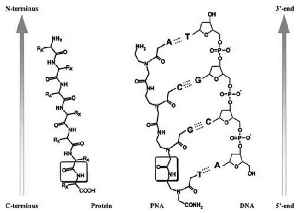
EcoPNA1169 is a sequence-specific peptide nucleic acid (PNA) probe designed for the sensitive and selective detection of Escherichia coli O157:H7. The probe sequence 5'-CAA CAC ACA GTG TC-3' hybridizes to the region between positions 1169 and 1183 of E. coli O157:H7 strain TW14359 (CP_001368). This probe was developed for use in peptide nucleic acid fluorescence in situ hybridization (PNA-FISH), a rapid molecular method that targets intracellular rRNA sequences for direct microbial identification. By targeting a specific sequence associated with the enterohemorrhagic E. coli (EHEC) group, EcoPNA1169 has proven to be a highly specific and sensitive tool for E. coli O157 detection. Key Features Key Features - Sequence-specific detection of E. coli O157:H7
- Designed for PNA-FISH targeting rRNA
- High specificity for EHEC-associated sequence region
- Strong hybridization affinity due to neutral PNA backbone
- Rapid and sensitive detection without PCR amplification
- Suitable for fluorescence-based microbial identification workflows
Scientific Background Scientific Background The peptide nucleic acid fluorescence in situ hybridization (PNA-FISH) method targets ribosomal RNA (rRNA), which serves as a universal phylogenetic marker and is present in high copy number within bacterial cells. This makes rRNA an attractive target for the rapid detection and identification of clinically or environmentally important microorganisms. EcoPNA1169 was specifically designed to recognize a sequence associated with the enterohemorrhagic E. coli (EHEC) group. Its proven specificity and sensitivity make it useful for distinguishing E. coli O157 from non-target organisms in mixed or complex samples. Mechanism Mechanism of Action In PNA-FISH assays, EcoPNA1169 enters fixed bacterial cells and hybridizes directly to its complementary 16S rRNA target sequence. Because PNA molecules have a neutral pseudopeptide backbone, they bind more strongly to complementary nucleic acid targets than corresponding DNA probes. - Strong and stable hybridization to rRNA target sequence
- Improved mismatch discrimination compared to DNA probes
- Efficient performance under stringent hybridization and wash conditions
- Enhanced signal quality for fluorescence-based detection
Applications Applications - Detection of E. coli O157:H7 in clinical microbiology
- Food safety testing for pathogenic E. coli contamination
- Environmental monitoring of water or agricultural samples
- PNA-FISH assays for microbial identification
- Research on enterohemorrhagic E. coli and related pathogens
Sequence Information Sequence Information | Probe Name | EcoPNA1169 | | Sequence | CAACACACAGTGTC | | Target Organism | E. coli O157:H7 | | Target Region | Positions 1169–1183 | | Reference Strain | E. coli O157:H7 strain TW14359 (CP_001368) | | Application | PNA-FISH | Why PNA Why Use PNA Probes? Compared with conventional DNA probes, PNA probes offer several important advantages in microbial detection: - Higher binding affinity to complementary nucleic acid targets
- Greater sequence specificity and mismatch discrimination
- Resistance to nuclease and protease degradation
- Improved assay robustness in demanding hybridization conditions
These properties make EcoPNA1169 a powerful option for laboratories seeking rapid and reliable detection of pathogenic E. coli O157. Recommended Usage Recommended Use EcoPNA1169 is intended for research use in fluorescence in situ hybridization workflows. The probe may be supplied unlabeled or with a fluorescent dye for direct visualization, depending on assay requirements. Hybridization and wash conditions should be optimized based on sample type, probe labeling format, and instrumentation. |