
Biotin-Ahx-LPETGS-NH2 Substrate: A Versatile Tool for Protease Activity Studies

LPETGS
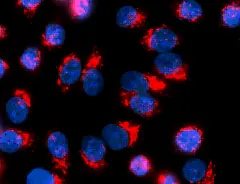
LIPTSTIC mechanism, from the cited paper.

The study of protease activity is critical for understanding cellular processes, disease mechanisms, and drug development. Among the various tools available for protease research, the Biotin-Ahx-LPETGS-NH2 substrate has emerged as a highly specific and versatile reagent. This peptide substrate is designed to detect and quantify the activity of sortase A, an enzyme widely used in protein engineering and bioconjugation. In this article, we explore the structure, applications, and significance of the Biotin-Ahx-LPETGS-NH2 substrate.


Key Takeaways

  • Biotin-Ahx-LPETGS-NH2 is a peptide substrate specifically designed for sortase A activity assays.
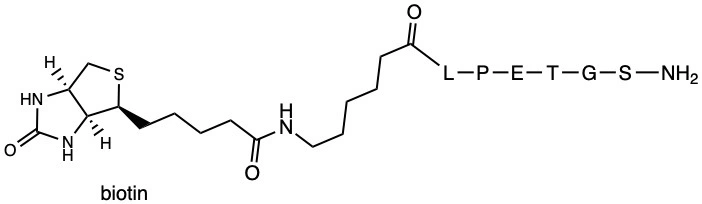
  • The substrate features a biotin tag for easy detection and purification, an Ahx (6-aminohexanoic acid) spacer for flexibility, and the LPETGS recognition sequence for sortase A.
  • It is widely used in protein labelingsite-specific protein modification, and enzyme kinetics studies.
  • The substrate’s design enables high sensitivity and specificity in detecting sortase A activity.
  • Applications include bioconjugationlive-cell imaging, and drug discovery.

Structure and Design of Biotin-Ahx-LPETGS-NH2

Biotin Tag for Detection and Purification

The biotin tag in the Biotin-Ahx-LPETGS-NH2 substrate serves as a universal handle for detection and purification. Biotin’s strong affinity for streptavidin allows for efficient immobilization on solid supports or visualization using streptavidin-conjugated fluorophores. This feature is particularly useful in ELISAWestern blotting, and pull-down assays, where the substrate’s interaction with sortase A can be easily monitored.

Ahx Spacer for Enhanced Flexibility

The inclusion of an Ahx (6-aminohexanoic acid) spacer between the biotin tag and the LPETGS sequence provides structural flexibility. This spacer ensures that the biotin tag does not sterically hinder the interaction between the substrate and sortase A, thereby maintaining high enzymatic efficiency. Additionally, the Ahx spacer improves the solubility of the peptide, making it suitable for a wide range of experimental conditions.

LPETGS Recognition Sequence

The LPETGS sequence is the core recognition motif for sortase A, a transpeptidase enzyme derived from Staphylococcus aureus. Sortase A cleaves the peptide bond between the threonine (T) and glycine (G) residues, enabling the attachment of functional groups or proteins to the C-terminus of the substrate. This sequence-specific cleavage is the basis for the substrate’s high specificity in sortase A activity assays.

Find our flagship LPETGS product here.

LPETGS

Applications of Biotin-Ahx-LPETGS-NH2

Protein Labeling and Bioconjugation

One of the primary applications of the Biotin-Ahx-LPETGS-NH2 substrate is in protein labeling and bioconjugation. Sortase A-mediated reactions allow for the site-specific attachment of labels, such as fluorophores or affinity tags, to proteins of interest. This approach is widely used in antibody-drug conjugates (ADCs)fluorescent protein tagging, and surface immobilization for biosensors.

Enzyme Kinetics Studies

The substrate is also employed in enzyme kinetics studies to characterize the activity and specificity of sortase A. By monitoring the cleavage of the LPETGS sequence, researchers can determine kinetic parameters such as Km and kcat. These studies provide valuable insights into the catalytic mechanism of sortase A and its potential applications in protein engineering.

Live-Cell Imaging

In live-cell imaging, the Biotin-Ahx-LPETGS-NH2 substrate can be used to visualize protease activity in real-time. The biotin tag allows for the incorporation of fluorescent probes, enabling the detection of sortase A activity in living cells. This application is particularly useful for studying cell surface dynamics and protein-protein interactions in their native environment.


Advantages of Biotin-Ahx-LPETGS-NH2

High Sensitivity and Specificity

The Biotin-Ahx-LPETGS-NH2 substrate offers high sensitivity and specificity for sortase A, making it an ideal tool for detecting low levels of enzyme activity. The LPETGS sequence ensures that the substrate is exclusively cleaved by sortase A, minimizing off-target effects.

Versatility in Experimental Design

The substrate’s modular design allows for customization to suit specific experimental needs. For example, the biotin tag can be replaced with other affinity tags or fluorophores, depending on the application. This versatility makes the substrate a valuable reagent in both basic research and industrial applications.

Find our other LPETG products here.

Compatibility with High-Throughput Assays

The Biotin-Ahx-LPETGS-NH2 substrate is compatible with high-throughput screening (HTS) platforms, enabling the rapid identification of sortase A inhibitors or activators. This capability is particularly relevant in drug discovery, where the substrate can be used to screen large compound libraries for potential therapeutic agents.

Pasqual, G., Chudnovskiy, A., Tas, J. et al. Monitoring T cell–dendritic cell interactions in vivo by intercellular enzymatic labelling. Nature 553, 496–500 (2018). https://doi.org/10.1038/nature25442
Unnatural Amino Acids: Citrulline

Citrulline, an unnatural amino acid, is a non-proteinogenic amino acid that plays a significant role in the urea cycle and nitric oxide production. Unlike proteinogenic amino acids, citrulline is not directly encoded by DNA but is synthesized through metabolic pathways. This article explores the properties, synthesis, and applications of citrulline, with insights from LifeTein’s expertise in custom peptide synthesis.

Key Takeaways

  • Non-Proteinogenic Amino Acid: Citrulline is not encoded by DNA but plays a crucial role in the urea cycle.

  • Metabolic Intermediate: Acts as an intermediate in the urea cycle, converting ammonia into urea.

  • Nitric Oxide Production: Involved in the production of nitric oxide, which helps in vasodilation.

  • LifeTein Expertise: LifeTein offers custom synthesis of citrulline-containing peptides for research purposes.


Properties of Citrulline

Chemical Structure

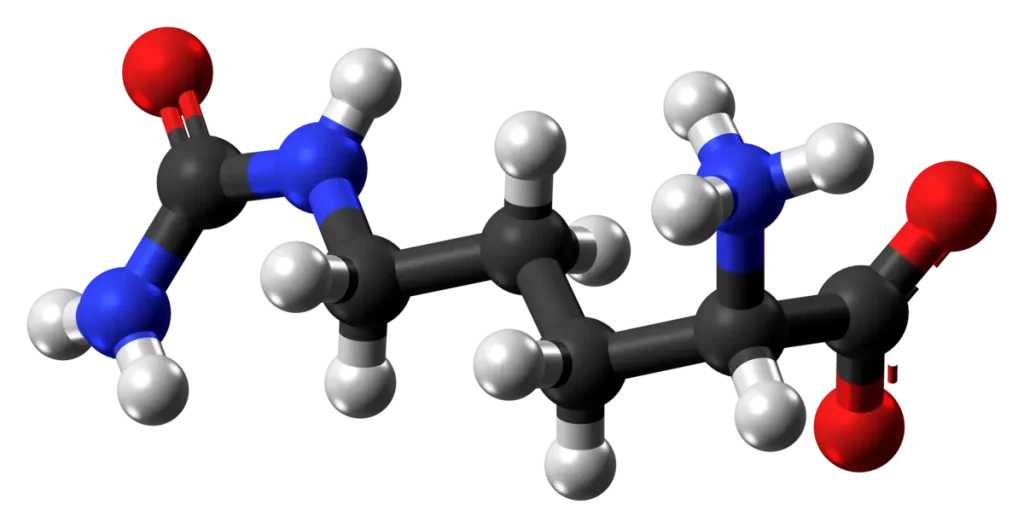
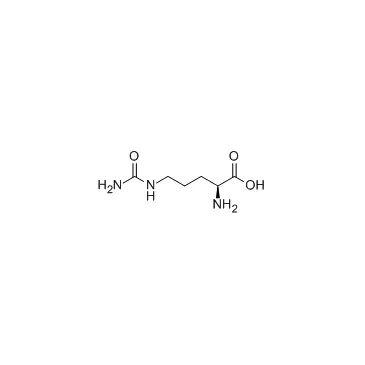
Citrulline, also known as 2-amino-5-(carbamoylamino)pentanoic acid, has a molecular formula of C6H13N3O3. It is a white crystalline powder that is soluble in water.

Role in the Urea Cycle

Citrulline is a key intermediate in the urea cycle, which is the primary pathway for the removal of ammonia in mammals. The cycle converts toxic ammonia into urea, which is then excreted in urine.

Nitric Oxide Production

Citrulline is also involved in the production of nitric oxide (NO), a molecule that plays a crucial role in vasodilation and blood flow regulation. The conversion of citrulline to arginine, catalyzed by nitric oxide synthase (NOS), is a critical step in NO production.

Synthesis of Citrulline

Biosynthesis

Citrulline is synthesized from ornithine and carbamoyl phosphate in a reaction catalyzed by the enzyme ornithine transcarbamylase. This reaction is a central step in the urea cycle.

Chemical Synthesis

Citrulline can also be synthesized chemically through various methods, including the reaction of asymmetric dimethylarginine (ADMA) with dimethylarginine deiminase (DDAH). This synthetic approach is used for producing citrulline for research and therapeutic purposes.

Find more peptide synthesis here

Citrulline

Applications of Citrulline

Medical and Therapeutic Uses

Citrulline is used in medical research to study metabolic disorders and cardiovascular diseases. Its role in the urea cycle makes it a potential therapeutic agent for conditions related to ammonia toxicity.

Sports and Exercise

Citrulline is popular among athletes and bodybuilders due to its potential to enhance blood flow and improve exercise performance. Supplements containing citrulline are marketed for their ability to boost nitric oxide production and reduce muscle fatigue.

Research Applications

LifeTein offers custom peptide synthesis services, including the incorporation of citrulline into peptides for research purposes. Researchers can utilize citrulline-containing peptides to study various biological processes and develop new therapeutic strategies.

Find our expedited synthesis service here

Future Directions

Advancements in Synthesis Techniques

Ongoing research aims to develop more efficient and scalable methods for synthesizing citrulline and its derivatives. Innovations in chemical synthesis and biotechnological approaches are expected to enhance the availability and utility of citrulline in scientific research and therapeutics.

Expanding Applications

As the understanding of citrulline’s properties and applications grows, its use in various fields, including drug discovery and protein engineering, is likely to expand. LifeTein’s commitment to providing high-quality custom peptides will continue to support advancements in these areas.

FAQ

What Is Citrulline?

Citrulline is an unnatural amino acid that plays a crucial role in the urea cycle and nitric oxide production.

Why Is Citrulline Important?

Citrulline is important for its role in ammonia detoxification and nitric oxide production, which are essential for metabolic and cardiovascular health.

Cy3 Fluorescent Labeling

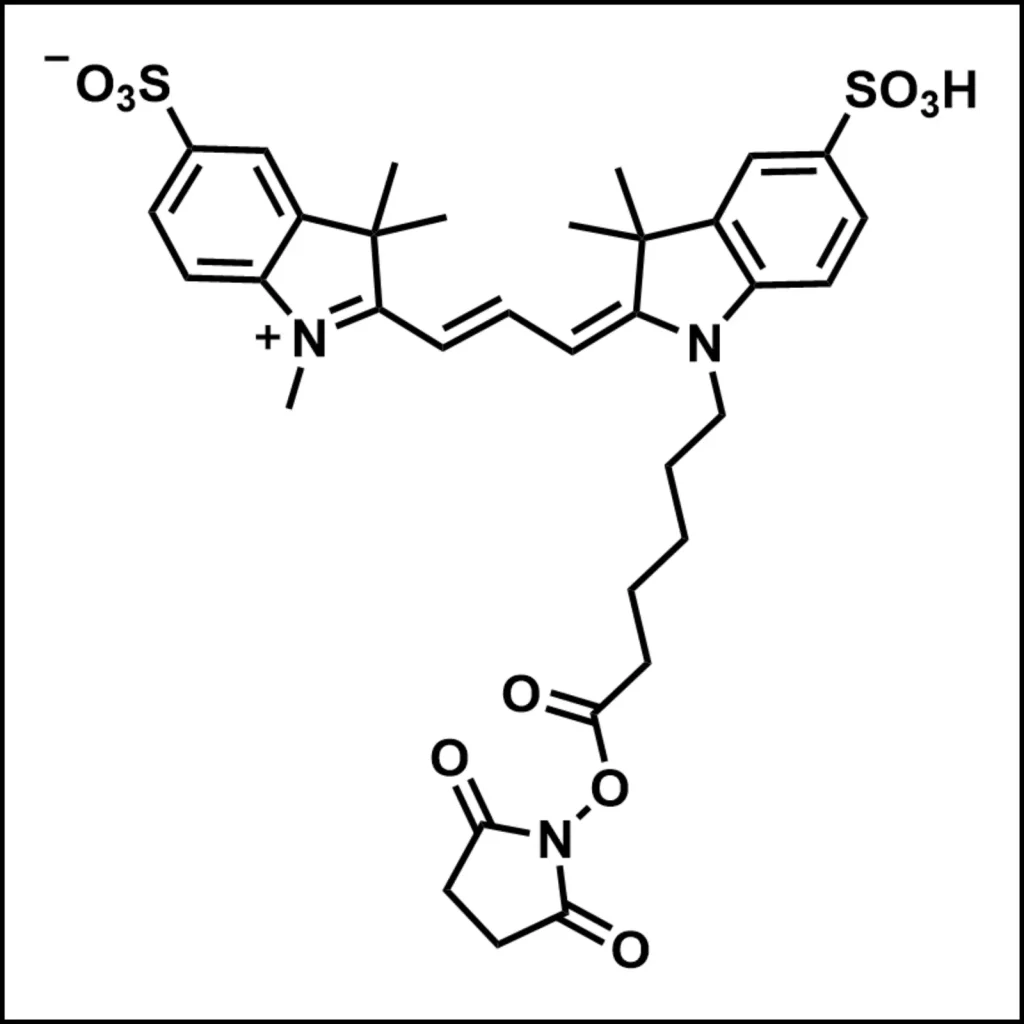
Cy3

Fluorescent labeling is a crucial technique in molecular biology, allowing researchers to visualize and track biological molecules. Among the various fluorescent dyes available, Cy3 (Cyanine3) stands out due to its bright orange fluorescence and versatility. This article explores the properties, applications, and synthesis of Cy3, with insights from LifeTein’s expertise in fluorescent labeling.

Key Takeaways

  • Bright Orange Fluorescence: Cy3 is a bright, orange-fluorescent dye used for labeling proteins and nucleic acids.
  • Excitation and Emission: Excited at 550 nm, emits at 570 nm.
  • Applications: Widely used in immunocytochemistry, flow cytometry, and genomics.
  • LifeTein Expertise: LifeTein offers Cy3 labeling services for custom peptide synthesis.

Properties of Cy3

Bright Orange Fluorescence

Cy3 is a bright, orange-fluorescent dye that is widely used for labeling proteins and nucleic acids. Its fluorescence properties make it an excellent choice for various imaging techniques.

Excitation and Emission

Cy3 has an excitation maximum at 550 nm and an emission maximum at 570 nm, making it compatible with common fluorescence microscopy setups. This allows for easy detection and imaging of labeled molecules.

Chemical Stability

Cy3 is chemically stable and can be conjugated to various biomolecules without significant loss of fluorescence. This stability is essential for long-term imaging and tracking experiments.

Applications of Cy3

Immunocytochemistry

Cy3 is extensively used in immunocytochemistry to label antibodies. By conjugating Cy3 to antibodies, researchers can visualize the location and distribution of target proteins within cells.

Flow Cytometry

In flow cytometry, Cy3-labeled antibodies are used to analyze and sort cells based on the presence of specific proteins. This technique is valuable for studying cell populations and identifying biomarkers.

Genomics

Cy3 is also employed in genomics research for labeling nucleic acids. It is used in techniques such as fluorescence in situ hybridization (FISH) to detect specific DNA sequences within cells.

Custom Peptide Synthesis

LifeTein offers custom peptide synthesis services, including Cy3 labeling. Researchers can request Cy3-labeled peptides for their specific applications, ensuring high-quality and consistent results3.

Find more labelling options here.

Cy3

Synthesis of Cy3-Labeled Molecules

Conjugation to Proteins

Cy3 can be conjugated to proteins through amine-reactive NHS-esters, which react with primary amines on the protein surface. This reaction forms a stable covalent bond, ensuring that the dye remains attached during imaging.

Conjugation to Nucleic Acids

For nucleic acids, Cy3 can be conjugated to the 5′ end of DNA or RNA molecules. This labeling allows for the visualization of specific nucleic acid sequences within cells or tissues.

Optimization of Labeling Conditions

Optimizing the labeling conditions, such as pH and reaction time, is crucial for achieving high labeling efficiency and maintaining the biological activity of the labeled molecules.

Future Directions

Advancements in Fluorescent Labeling

Ongoing research aims to develop new fluorescent dyes with improved properties, such as higher brightness, photostability, and reduced background fluorescence. These advancements will enhance the sensitivity and accuracy of fluorescent labeling techniques.

Expanding Applications

As the technology advances, the applications of fluorescent labeling with Cy3 and other dyes are expected to expand into new areas, including targeted drug delivery, biosensors, and live-cell imaging.

Find more peptide synthesis options here.

FAQ

What Is Cy3?

Cy3 is a bright, orange-fluorescent dye used for labeling proteins and nucleic acids.

Why Is Cy3 Important?

Cy3 is valuable for its bright fluorescence, compatibility with common imaging techniques, and wide range of applications in molecular biology.

How Is Cy3 Synthesized?

Cy3 can be synthesized chemically and then conjugated to biomolecules through amine-reactive NHS-esters or other reactive groups.

What Services Does LifeTein Offer?

LifeTein provides custom peptide synthesis services, including Cy3 labeling, to meet the specific needs of researchers.

Unnatural Amino Acids: Norleucine

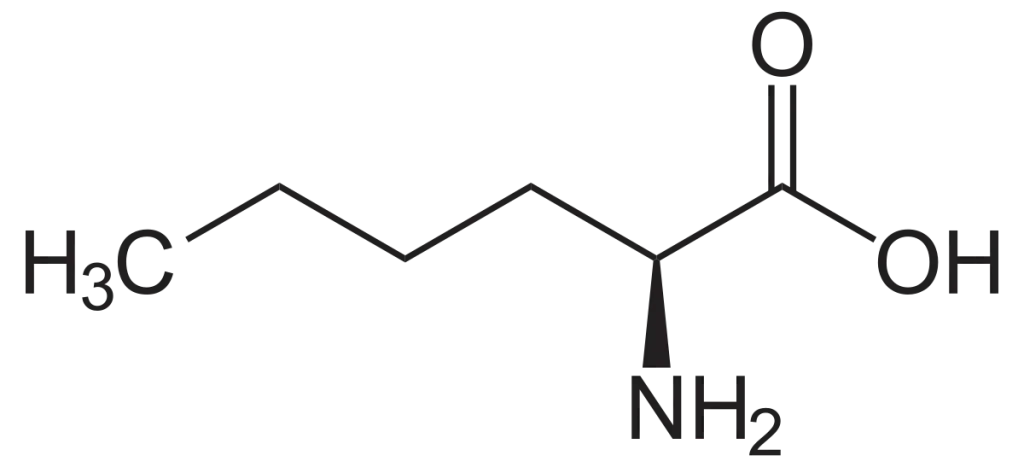
Norleucine

Norleucine, an unnatural amino acid, has garnered attention due to its structural similarity to leucine and its potential applications in research and therapeutics. This article explores the properties, synthesis, and applications of norleucine, with insights from LifeTein’s expertise in custom peptide synthesis.

Key Takeaways

  • Structural Similarity: Norleucine is structurally similar to leucine but lacks a methyl group.

  • Synthetic Applications: Used in peptide synthesis and research to study protein structure and function.

  • Biological Role: Investigated for its potential in reducing neurotoxicity in Alzheimer’s disease.

  • LifeTein Expertise: LifeTein offers custom synthesis of norleucine-containing peptides.


Properties of Norleucine

Structural Characteristics

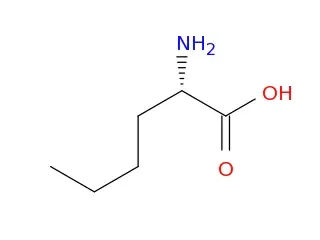
Norleucine, also known as 2-aminohexanoic acid, is an isomer of leucine. It lacks the methyl group present in leucine, making it a valuable tool for studying the effects of structural modifications on protein function. Norleucine is a white, water-soluble solid with a molecular formula of C6H13NO2.

Chemical Properties

Norleucine exhibits similar chemical properties to leucine, such as solubility in water and reactivity with other amino acids. Its acidity (pKa) values are 2.39 (carboxyl) and 9.76 (amino), making it suitable for various biochemical applications.

Synthesis of Norleucine

Chemical Synthesis

Norleucine can be synthesized through chemical methods involving the modification of leucine or other amino acids. The process typically involves the removal of a methyl group from leucine, followed by purification to obtain the desired product. LifeTein’s custom peptide synthesis services offer advanced techniques for incorporating norleucine into peptides with high purity and efficiency.

Biological Synthesis

In nature, norleucine is found in small amounts in some bacterial strains. Its biosynthesis involves the action of enzymes such as 2-isopropylmalate synthase on α-ketobutyrate. This natural occurrence provides insights into the potential biological roles of norleucine in cellular processes.

Find out more about peptide synthesis here.

Applications of Norleucine

Norleucine

Research and Development

Norleucine is extensively used in research to study protein structure and function. Its structural similarity to leucine allows scientists to investigate the effects of amino acid substitutions on protein stability and activity. LifeTein’s expertise in custom peptide synthesis enables researchers to design and synthesize norleucine-containing peptides for various applications.

Therapeutic Potential

One notable application of norleucine is in the study of Alzheimer’s disease. Research has shown that substituting methionine with norleucine in amyloid-β peptides can reduce their neurotoxic effects. This finding highlights the potential of norleucine as a therapeutic agent for neurodegenerative diseases.

Future Directions

Advancements in Synthesis Techniques

Ongoing research aims to develop more efficient and scalable methods for synthesizing norleucine and its derivatives. Innovations in chemical synthesis and biotechnological approaches are expected to enhance the availability and utility of norleucine in scientific research and therapeutics.

Expanding Applications

As the understanding of norleucine’s properties and applications grows, its use in various fields, including drug discovery and protein engineering, is likely to expand. LifeTein’s commitment to providing high-quality custom peptides will continue to support advancements in these areas.

Find more unique amino acids here.

FAQ

What Is Norleucine?

Norleucine is an unnatural amino acid structurally similar to leucine but lacking a methyl group.

Why Is Norleucine Important?

Norleucine is valuable for studying protein structure and function, and it has potential therapeutic applications, such as reducing neurotoxicity in Alzheimer’s disease.

How Is Norleucine Synthesized?

Norleucine can be synthesized chemically by modifying leucine or through biological processes in certain bacterial strains.