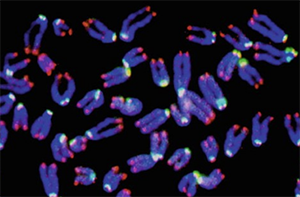
The Pan-centromere PNA probe (sequence: AAACTAGACAGAAGCATT) is designed to bind to the centromeric regions of human chromosomes. The centromere is a crucial part of chromosomes, responsible for properly segregating sister chromatids during cell division. This probe targets alpha-satellite DNA sequences found at centromeres, enabling precise detection of centromeric regions in various biological assays. The reverse Complementary Sequence (5' to 3') is AATGCTTCTGTCTAGTTT. Function: The Pan-centromere PNA probe is mainly used in Fluorescence In Situ Hybridization (FISH) to visualize centromeres. Its uncharged peptide nucleic acid (PNA) backbone provides high specificity, which binds more stably to DNA than traditional DNA probes. The probe can bind centromeres across all human chromosomes, making it valuable for various cytogenetic studies. Applications: -
Chromosomal Aberration Analysis: The Pan-centromere probe is widely used to identify chromosomal abnormalities, such as aneuploidies (extra or missing chromosomes), particularly in conditions like cancer or genetic disorders. -
Cytogenetic Research: The probe is applied in general chromosome counting and identifying centromeric regions in cells to monitor genome integrity during research on diseases like cancer. The Pan-centromere PNA probe is a key tool in cytogenetics, allowing researchers to study chromosome stability and investigate various genetic disorders and their underlying chromosomal abnormalities. |